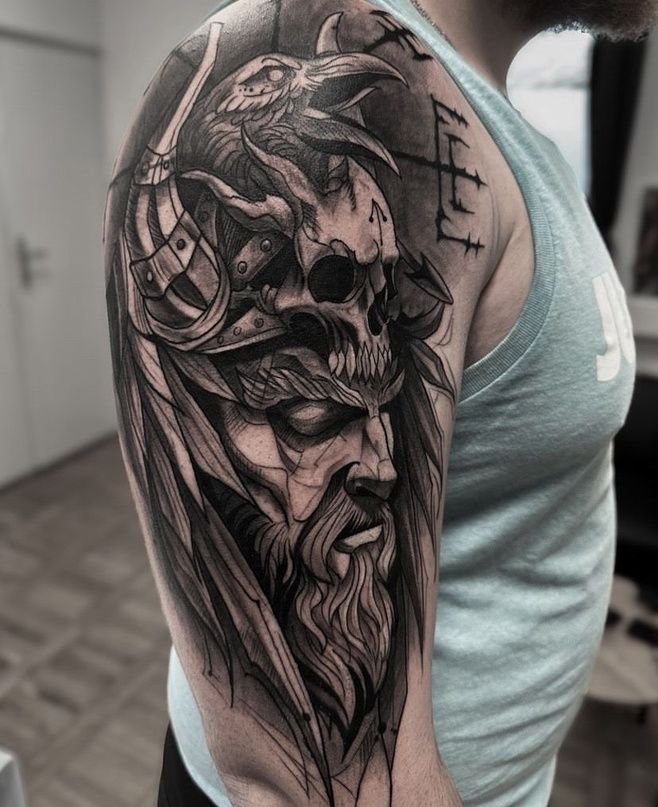
The leg is one of the most versatile canvases the human body offers. Long stretches of skin, naturally defined sections from thigh to ankle, and the ability to show or conceal your ink on demand — it’s no wonder leg tattoo styles men choose are getting bolder and more ambitious every year. Whether you’re planning a full leg sleeve or a single statement piece on the calf, what you pick and where you place it matters more than most people realize.
This guide breaks down 13 of the most sought-after leg tattoo styles right now. Each one has its own character, history, and visual weight. If you’ve been sitting on the idea for a while, this is the push you’ve been waiting for.
1. Traditional American Tattoos
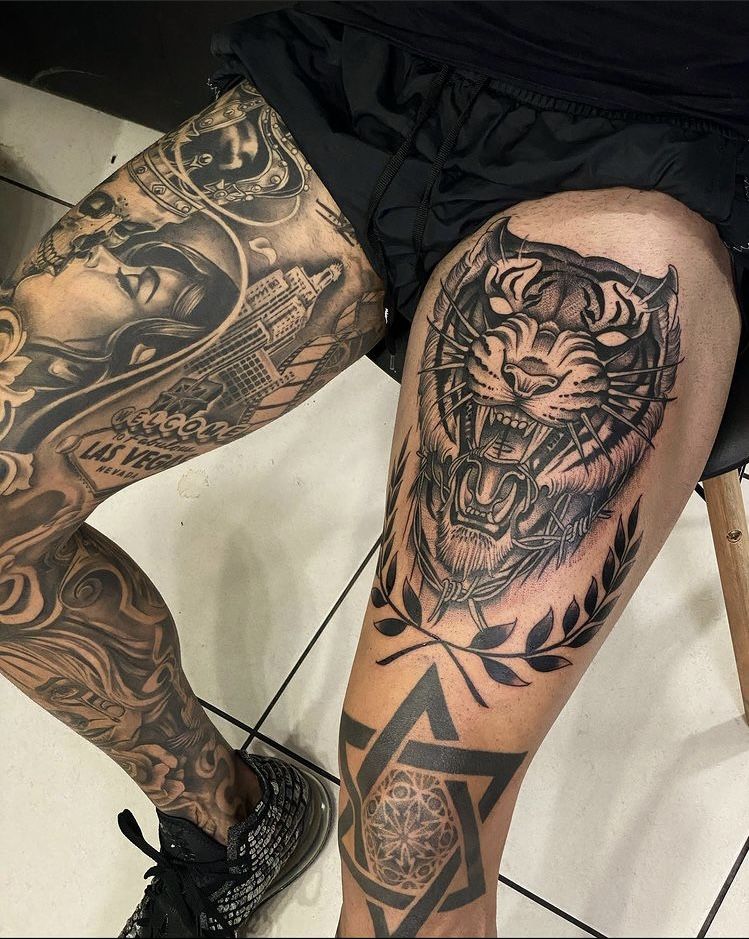
Few styles have stood the test of time quite like Traditional American tattooing. Bold black outlines, a limited but punchy color palette — reds, yellows, greens — and iconic imagery like eagles, panthers, daggers, and roses define this style. It was built to last, and it does. Even decades-old traditional tattoos hold their shape better than most modern styles because of how deliberately the lines are drawn and the ink is packed.
On the leg, traditional work shines. The thigh offers space for larger compositions — a classic ship, a roaring panther, or a fully rendered eagle. The calf is ideal for single-image pieces like a skull, anchor, or rose with a banner. The style’s high contrast makes it pop against skin at any distance.
Men are returning to Traditional American because it feels honest. There’s nothing pretentious about it — just clean, confident tattooing with a lineage stretching back nearly a century. If you want something that looks as good in 30 years as it does the day you get it, this is one of the safest bets in tattooing.
2. Tribal Tattoos
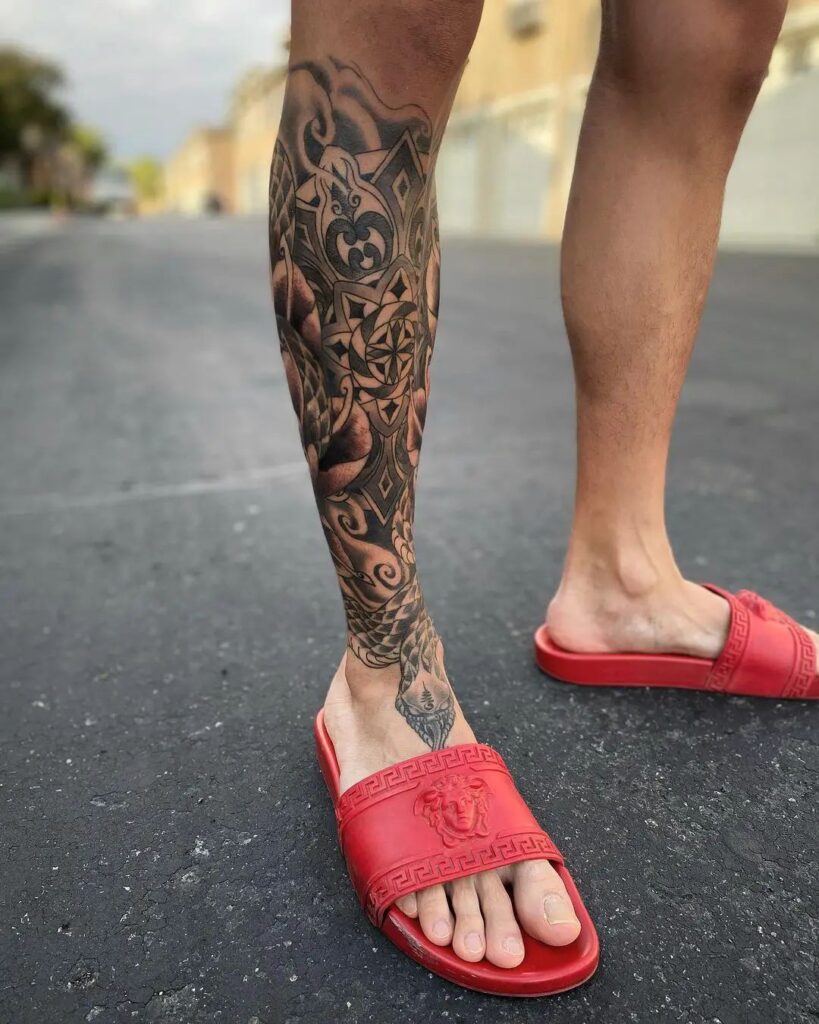
Tribal tattooing is one of the oldest forms of body art on the planet. Across Polynesian cultures — Samoan, Hawaiian, Māori, Filipino — these patterns carried deep meaning: social rank, spiritual protection, life milestones. Today’s men are drawn to tribal not just for aesthetics, but for that sense of weight and intention behind every mark.
The patterns themselves are built on geometric repetition — thick black bands, sharp points, interlocking shapes — that create a sense of movement even in stillness. On the leg, tribal work translates exceptionally well. Full leg sleeves in a Polynesian style are increasingly common, wrapping from hip to ankle in continuous flowing patterns. Calf pieces in Māori or Samoan style are equally striking.
If you’re drawn to tribal, take your time researching the cultural roots of the specific style you want. Many talented artists specialize in authentic Polynesian work and can create a piece that honors the tradition while being personal to you. This isn’t a style to rush.
3. Japanese Tattoo Style (Irezumi)
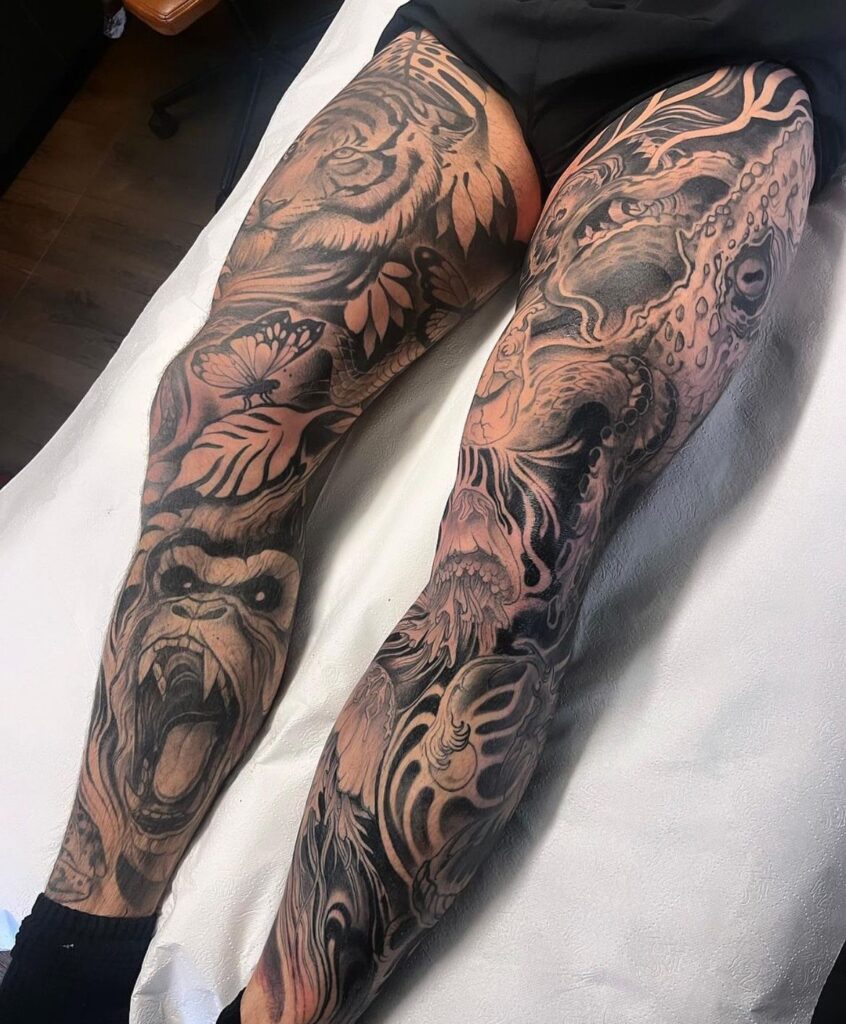
Japanese tattooing — known as Irezumi — is arguably the most complete tattoo tradition in the world. It has its own iconography, its own color theory, its own compositional rules, and centuries of refinement behind it. Dragons, koi fish, tigers, phoenixes, samurai, cherry blossoms, and waves are among the most recognized motifs, and each carries specific meaning.
What makes Japanese work particularly suited to the leg is the way the style flows with the body’s natural contours. A coiling dragon that wraps around the thigh and down the calf feels natural because Japanese artists have spent generations mastering body-aware composition. The bold outlines, rich shading, and background elements like wind bars and water create designs that feel alive.
For men looking at a full leg sleeve, Japanese is one of the most cohesive options available. Every element has a place, and a skilled artist can connect imagery across thigh, knee, and calf into a single visual narrative. If you’re considering getting serious about body art, Japanese tattooing is worth studying before you commit to anything.
4. Blackwork Tattoos
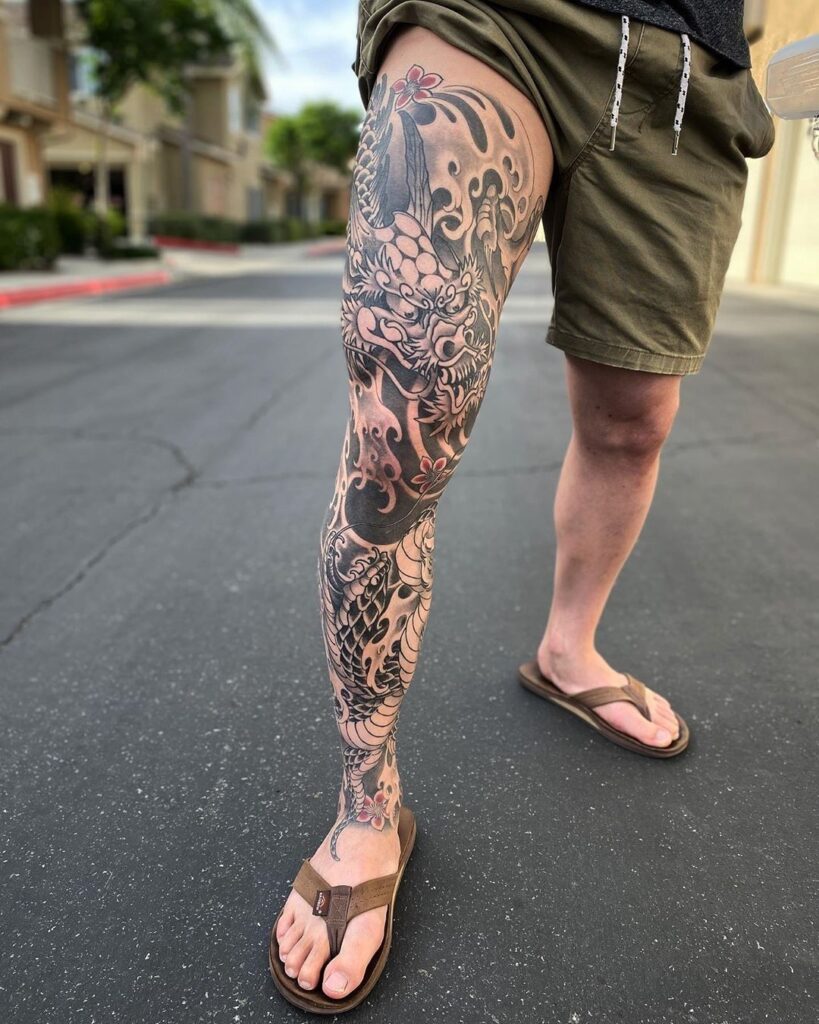
Blackwork is exactly what it sounds like — tattoos executed entirely in black ink. But the range within that constraint is extraordinary. Some blackwork pieces are dense, almost architectural, with solid black fills and geometric precision. Others are illustrative, relying on fine linework and negative space to create depth and detail without a single drop of color.
The leg suits blackwork in every direction. A bold black geometric pattern on the thigh reads like wearable architecture. A fine-line blackwork portrait on the calf can be photo-realistic in its detail. Floral blackwork that travels down the side of the leg has a graphic quality that feels distinctly modern.
Men gravitate toward blackwork because of its versatility and how well it ages. Black ink doesn’t fade into muddy colors — it softens slightly over time but retains its visual impact far longer than color work. If you prefer a cleaner, more graphic look, blackwork delivers without compromise.
5. Geometric Tattoos
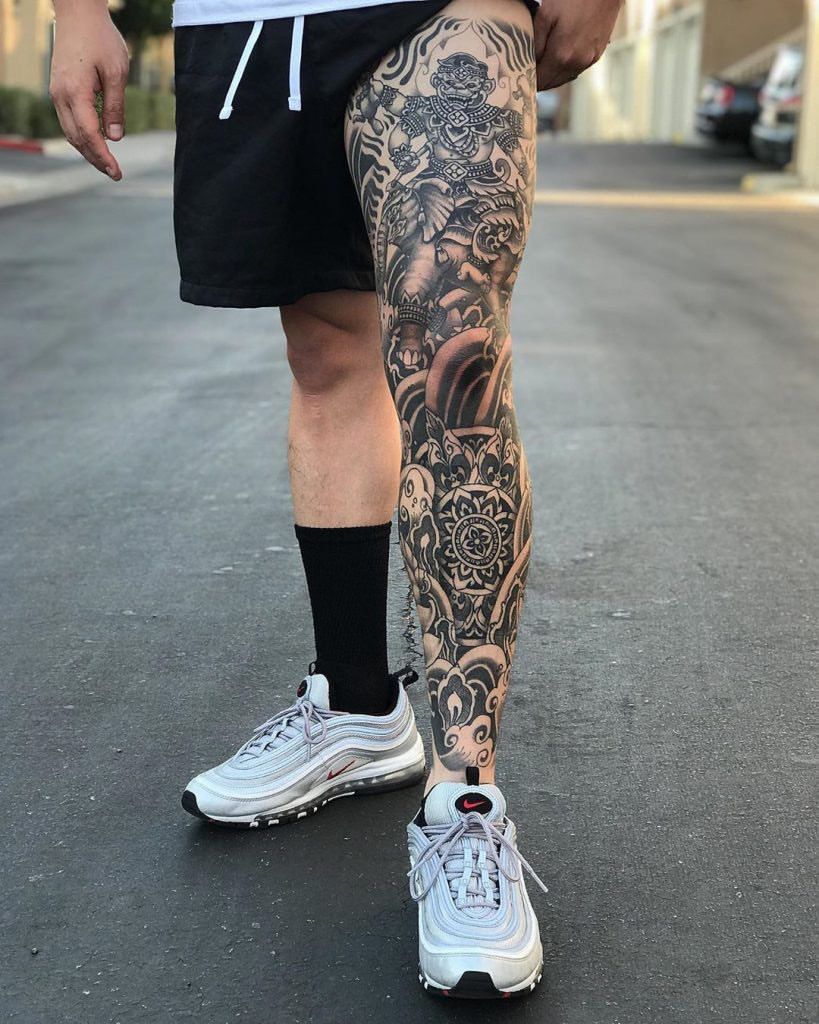
Geometric tattooing takes precision seriously. Sacred geometry, mandalas, tessellations, polyhedrons, and abstract shapes rendered with ruler-straight lines and perfect symmetry — this style is for the man who appreciates order and mathematical beauty. The precision required means you need an artist with a steady hand and experience in geometric work specifically.
On the leg, geometric tattoos work particularly well in two ways: as contained pieces (a mandala on the knee cap or a geometric wolf on the thigh) or as part of a larger composition where geometric patterns transition into organic imagery. The contrast between sharp angles and natural forms creates a visual tension that’s genuinely compelling.
The meaning behind geometric work varies — sacred geometry has spiritual roots in multiple traditions, while purely abstract pieces often represent a personal philosophy of structure and balance. Either way, the result on the leg is something that demands a second look. The thigh and calf are both excellent placements for medium to large geometric pieces.
6. Realism Tattoos
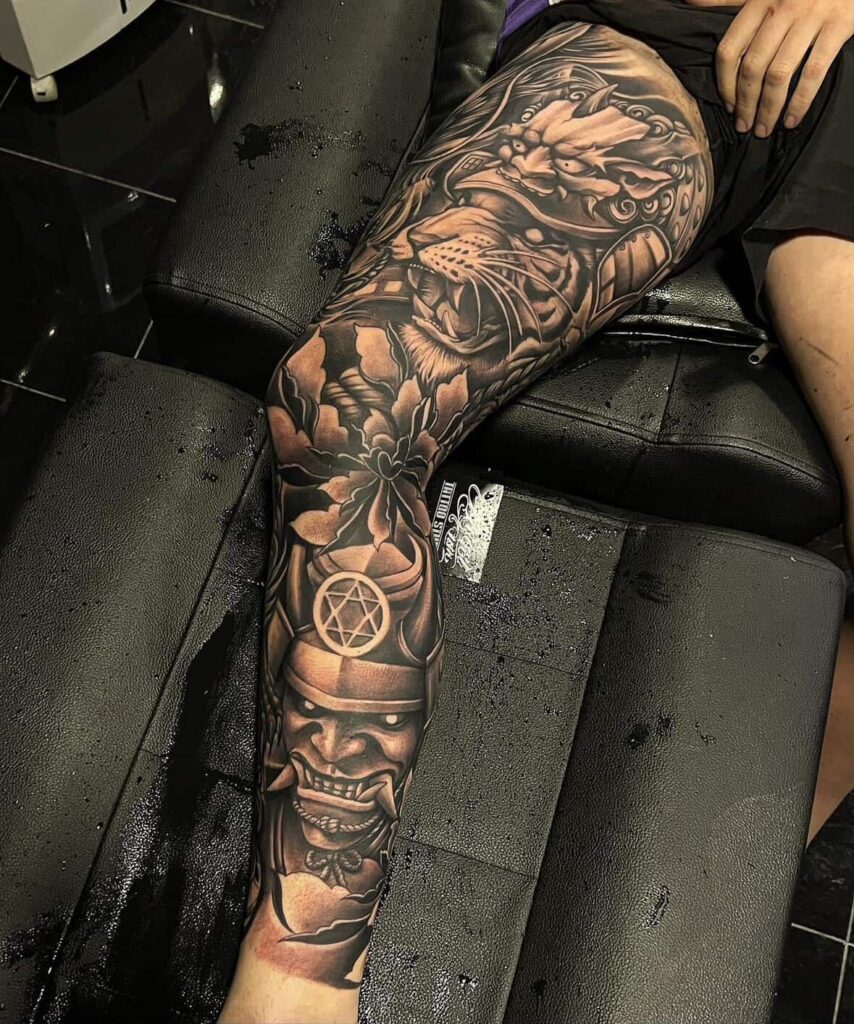
Realism is technical tattooing at its most demanding. Portraits, wildlife, landscapes, objects — rendered in ink with the same level of detail you’d expect from a photograph or oil painting. The shading, highlights, and depth that a skilled realism artist can achieve are genuinely remarkable, and the leg provides the space to do this style justice.
Portrait tattoos on the thigh are one of the most ambitious things a man can commit to, and when executed well, they’re unforgettable. Wildlife realism — a wolf, a lion, an eagle — on the calf is equally impactful. The key with realism is finding an artist whose portfolio demonstrates consistent, high-quality work in this style specifically, because it leaves no room for shortcuts.
If you’re interested in memorial tattoos — honoring someone through their portrait — realism is the natural choice. It’s also worth exploring forearm tattoos for men if you want to see how realism translates across different placements before committing to a large leg piece.
7. Neo-Traditional Tattoos
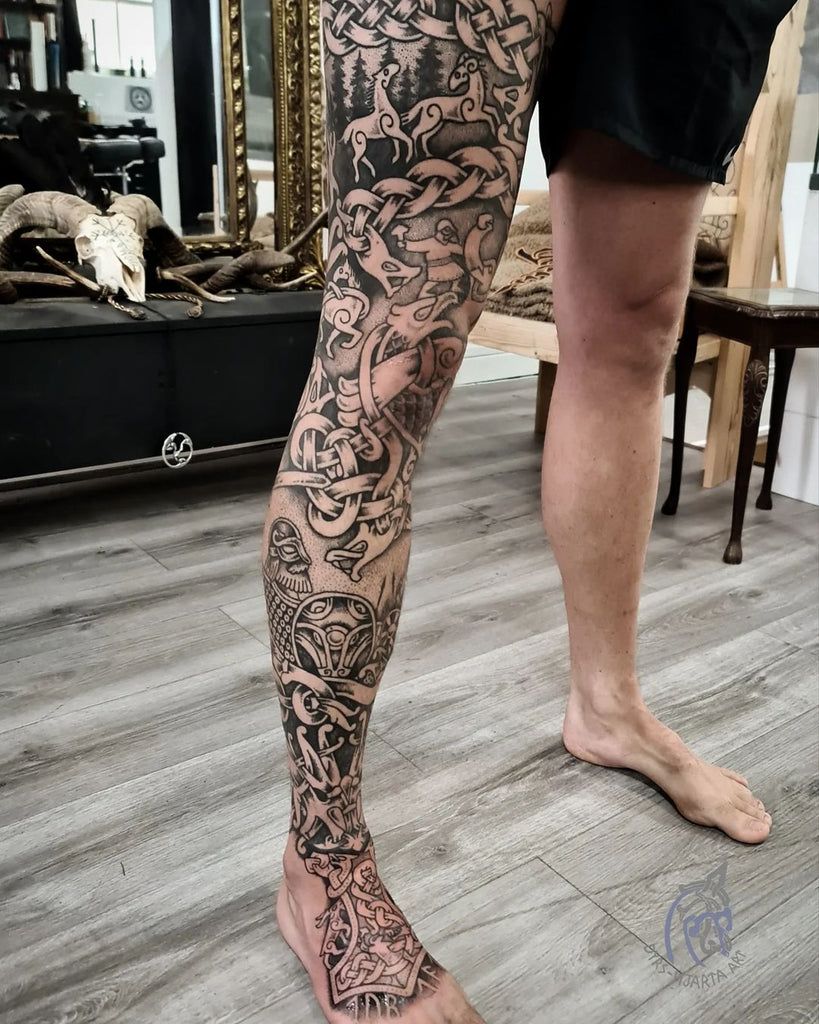
Neo-Traditional takes everything that works about Traditional American tattooing and opens the door to more complexity. The bold outlines remain, but the color palette expands dramatically, the imagery becomes more detailed, and influences from Art Nouveau and illustration art creep in. Animals, botanical elements, faces, and mythological creatures are common subjects.
The style sits in an interesting space — it has the durability advantages of traditional tattooing with the visual richness of more detailed styles. On the leg, neo-traditional pieces tend to look lush and layered. A fox or wolf rendered in neo-traditional style on the thigh, with detailed fur texture and a rich background, occupies the space beautifully.
Men who want something more painterly than classic traditional but more durable than watercolor or fine line tend to land on neo-traditional. It’s a style that photographs well, holds up over time, and rewards the viewer the longer they look at it.
8. Dotwork Tattoos
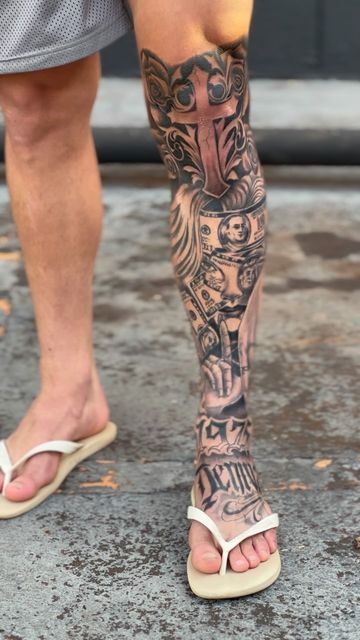
Dotwork tattooing builds images from thousands of individual dots rather than continuous lines. The result is a texture and depth that feels almost hand-drawn — organic, slightly rough-edged, unlike anything else in tattooing. Mandalas, geometric shapes, and illustrative imagery all lend themselves to the dotwork technique, and the style has strong roots in sacred and spiritual art traditions.
On the leg, dotwork creates a visual softness that contrasts with bolder styles. A dotwork mandala centered on the knee is one of the most popular leg placements for this style — the circular composition fits the joint naturally. Dotwork geometric patterns on the calf or thigh have a depth that solid blackwork can’t replicate.
The process for dotwork is time-intensive, and larger pieces require multiple sessions. But the result is a tattoo that feels genuinely handcrafted. Men who want something that looks artisanal rather than mechanical tend to find dotwork deeply satisfying.
9. Minimalist Tattoos
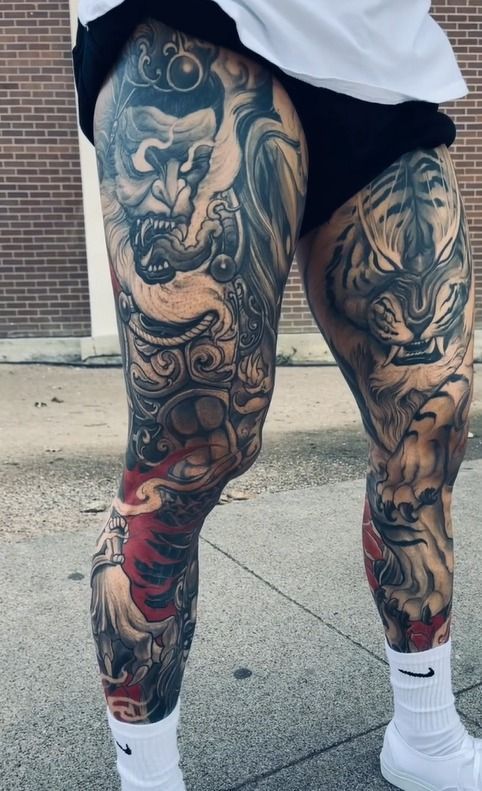
Not every man wants a full sleeve. Minimalist tattooing — fine single-needle lines, small symbolic images, simple geometric shapes — has built a serious following among men who want ink that’s intentional rather than overwhelming. Less is more, and a small, perfectly placed minimalist tattoo on the leg can be just as impactful as a large elaborate piece.
Common minimalist leg placements include the ankle (a simple line, symbol, or word), the shin, and the inner calf. The restraint of the style means placement becomes even more important — where you put it says as much as what you put there. A small arrow or coordinate on the ankle, a single-line mountain range on the calf, a Roman numeral on the inner leg — these pieces work because of their precision and intention.
If you’re new to tattoos or want to test the waters before committing to something larger, starting with a minimalist leg piece is a smart approach. It gives you a feel for the process, the healing, and how ink looks on your skin without a large investment of time or money.
10. Skull Tattoos
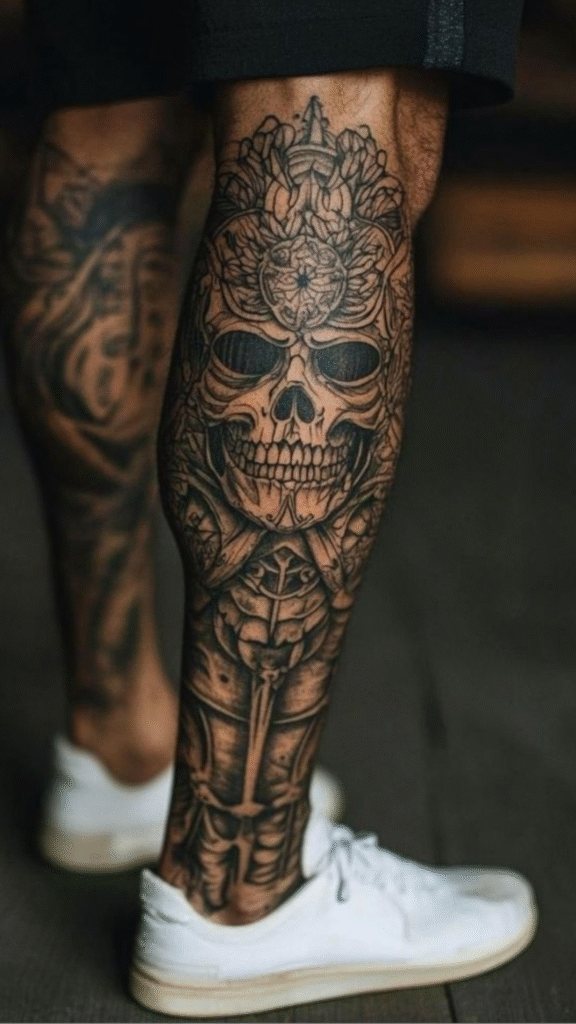
The skull is one of the most enduring images in all of tattooing, and for good reason. It carries meaning across cultures and centuries — mortality, rebellion, strength, the acceptance of death as part of life. Skull tattoos range from realistic anatomical renderings to stylized Sugar Skull designs rooted in Día de los Muertos tradition to dark gothic interpretations and everything in between.
On the leg, skull placements are flexible. A realistic skull on the knee cap — using the natural shape of the joint to give the skull a dimensional quality — is a classic choice. A large skull piece on the thigh allows for more background detail: smoke, flames, flowers, or geometric elements. The calf works well for side-profile skull designs.
If you’re drawn to skull imagery, it’s worth exploring how different styles interpret the same subject. A skull done in traditional American style looks completely different from one done in realism or neo-traditional — same image, entirely different energy. You can find more inspiration and ideas around skull-based designs at Skull Hand Tattoo to see how the motif translates across placements.
11. Celtic Tattoos
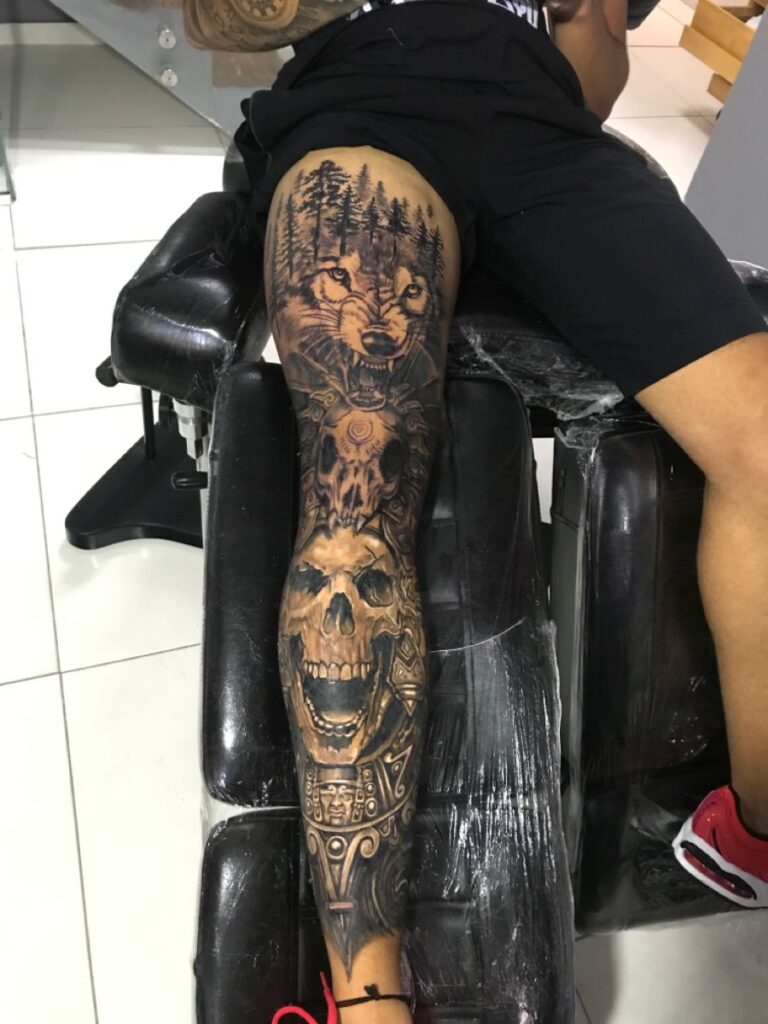
Celtic knotwork is a study in controlled complexity. The interwoven lines that have no visible beginning or end represent eternity, interconnectedness, and the cyclical nature of life. Celtic tattooing draws from the art traditions of Iron Age Europe — Ireland, Scotland, Wales — and carries a strong sense of heritage and identity for many men who choose it.
The leg is a natural fit for Celtic designs. Knotwork bands around the thigh or calf work beautifully as sleeve-style pieces. Large Celtic cross or shield designs on the thigh allow for the full complexity of the knotwork to unfold. The style works in both pure blackwork and with subtle color, though many men prefer the clean, graphic quality of black-only Celtic work.
Men with Celtic ancestry often choose this style as a way to connect with their roots, but you don’t need a specific heritage to appreciate the artistry. What matters is that the design is rendered well — Celtic knotwork requires precision, and the wrong artist can turn intricate patterns into muddy lines. Research thoroughly before committing.
12. Biomechanical Tattoos
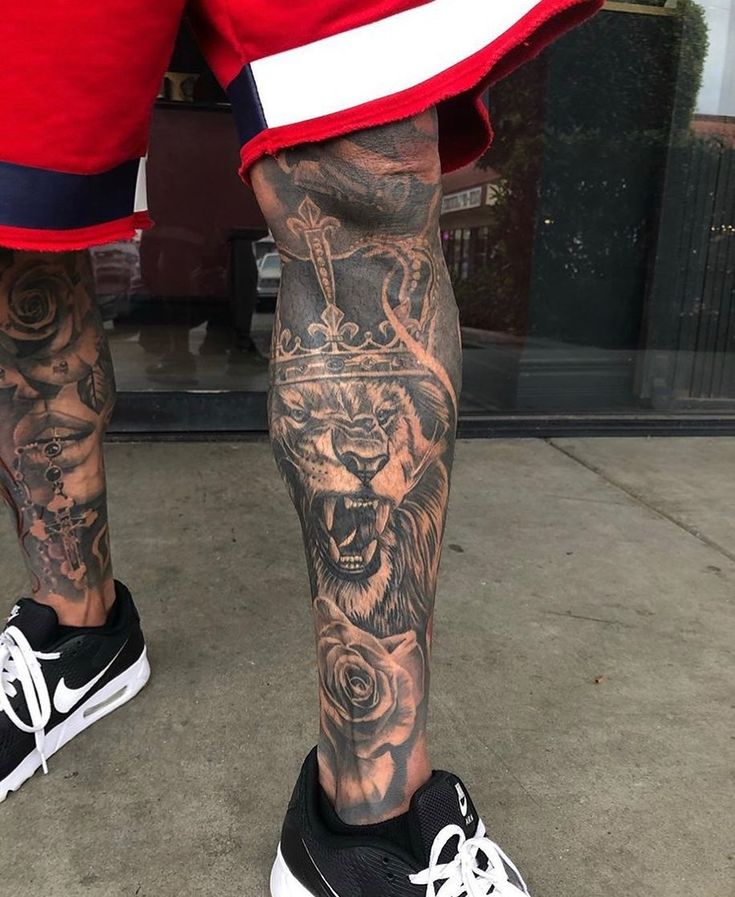
Biomechanical tattooing creates the illusion that beneath the skin lies machinery — gears, pistons, cables, and mechanical components rendered with such realism that the leg appears to be part human, part machine. The style emerged from the science fiction art of H.R. Giger and has evolved into one of the most technically demanding styles in tattooing.
The leg is one of the best placements for biomechanical work. The natural muscle definition of the thigh and calf give the illusion of depth — a biomechanical piece that follows the contours of the leg looks like the machine beneath is actually shaped by the muscle around it. Large thigh pieces that wrap around and continue onto the calf create a genuinely immersive effect.
Men drawn to science fiction, engineering, or simply the surreal tend to connect with biomechanical tattooing. It’s a conversation starter every single time, and a well-executed piece genuinely looks like nothing else. Finding an artist with a strong portfolio in this style specifically is non-negotiable — the 3D shading and trompe-l’oeil effects require serious skill.
13. Watercolor Tattoos
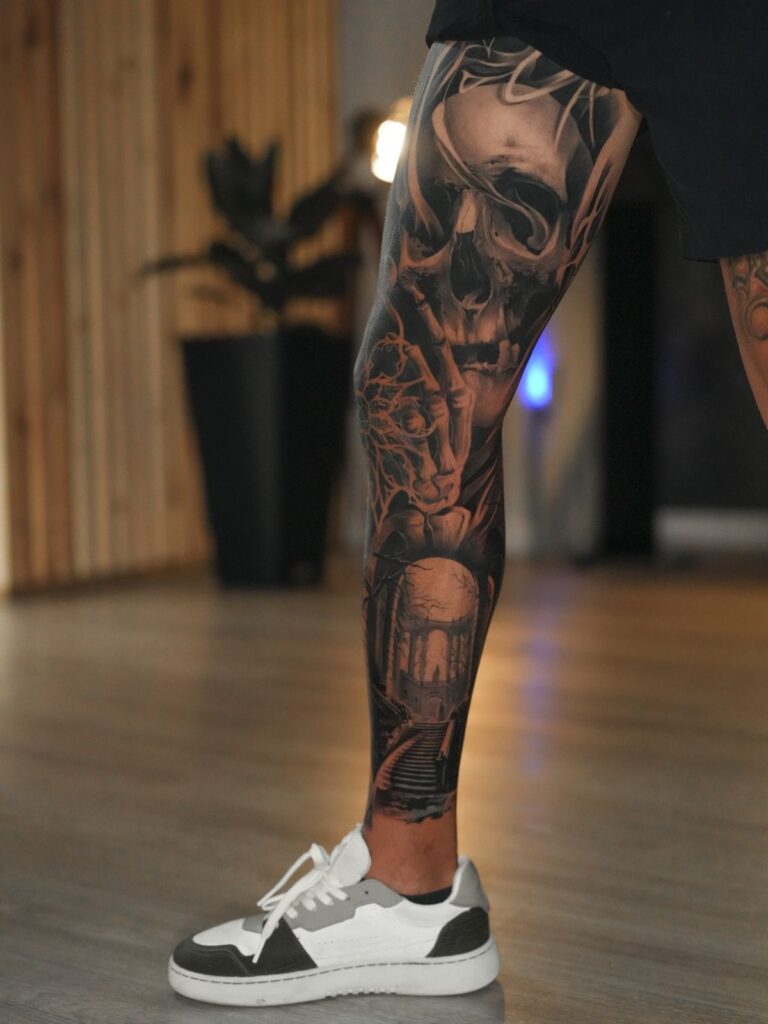
Watercolor tattooing mimics the look of loose, flowing watercolor painting — soft edges, color bleeds, brushstroke textures, and bright pigments without heavy black outlines. It’s one of the more unconventional choices among leg tattoo styles men are exploring, and it works precisely because it’s unexpected on a male canvas.
Abstract watercolor splashes on the calf or thigh have an artistic quality that stands apart from every other style on this list. Animals — wolves, birds, foxes — rendered in watercolor with loose, expressive color work are among the most popular subjects. Botanical elements like flowers and leaves also translate beautifully to this style.
The honest caveat with watercolor tattoos is longevity. Without strong black outlines anchoring the design, the soft edges can blur and the colors can fade faster than traditional or blackwork styles. Many artists now create hybrid designs — a strong linework base with watercolor effects layered over — which gives you the visual style with better staying power. If you want color and movement in your leg tattoo, this approach is worth discussing with your artist.
Tips Before Getting a Leg Tattoo
Before you book your appointment, a few practical points worth keeping in mind:
Choose your placement deliberately: The thigh, knee ditch, shin, calf, and ankle all heal differently and have different pain levels. The knee ditch and shin are notoriously more uncomfortable. The calf and outer thigh are generally easier for first-timers.
Think about flow: If you’re planning multiple pieces or a future sleeve, consider how each tattoo will connect visually. A random collection of unrelated styles can look cluttered; a considered approach creates something cohesive.
Research your artist: Every style on this list requires a different skill set. A realism specialist isn’t necessarily the right choice for geometric or tribal work. Look for an artist whose portfolio is dominated by the style you want.
Prepare for the session: Stay hydrated, eat a proper meal beforehand, wear loose clothing that gives your artist easy access to the leg, and plan for breaks on longer sessions. Leg pieces can take multiple hours.
Protect your investment: Follow aftercare instructions carefully — moisturize, avoid sun exposure, and don’t pick at peeling skin. A well-healed tattoo looks dramatically better than one that’s been neglected through the healing process. For placement ideas beyond the leg, exploring thigh tattoo designs can help you understand how ink flows from one area to the next.
Conclusion
The leg gives you options most other placements don’t. Room to work with. Natural sections that frame imagery. The ability to build something over time into a full sleeve, or keep it simple with a single piece that means everything. The 13 leg tattoo styles men are gravitating toward right now run the full range from ancient tradition to modern innovation, and every one of them has something distinct to offer.
Take your time with the decision. Study the styles, find an artist whose work moves you, and walk in with a clear vision. The best tattoos are the ones that were thought through — not because spontaneity can’t produce great work, but because the leg is too good a canvas to waste on something you’re not fully committed to. Whatever direction you choose, wear it with conviction.